From 3 Cents to 1 Dollar per Image: The True Cost of GPT Image 2 vs. Nano Banana 2
AI Review Lab
May 4, 2026
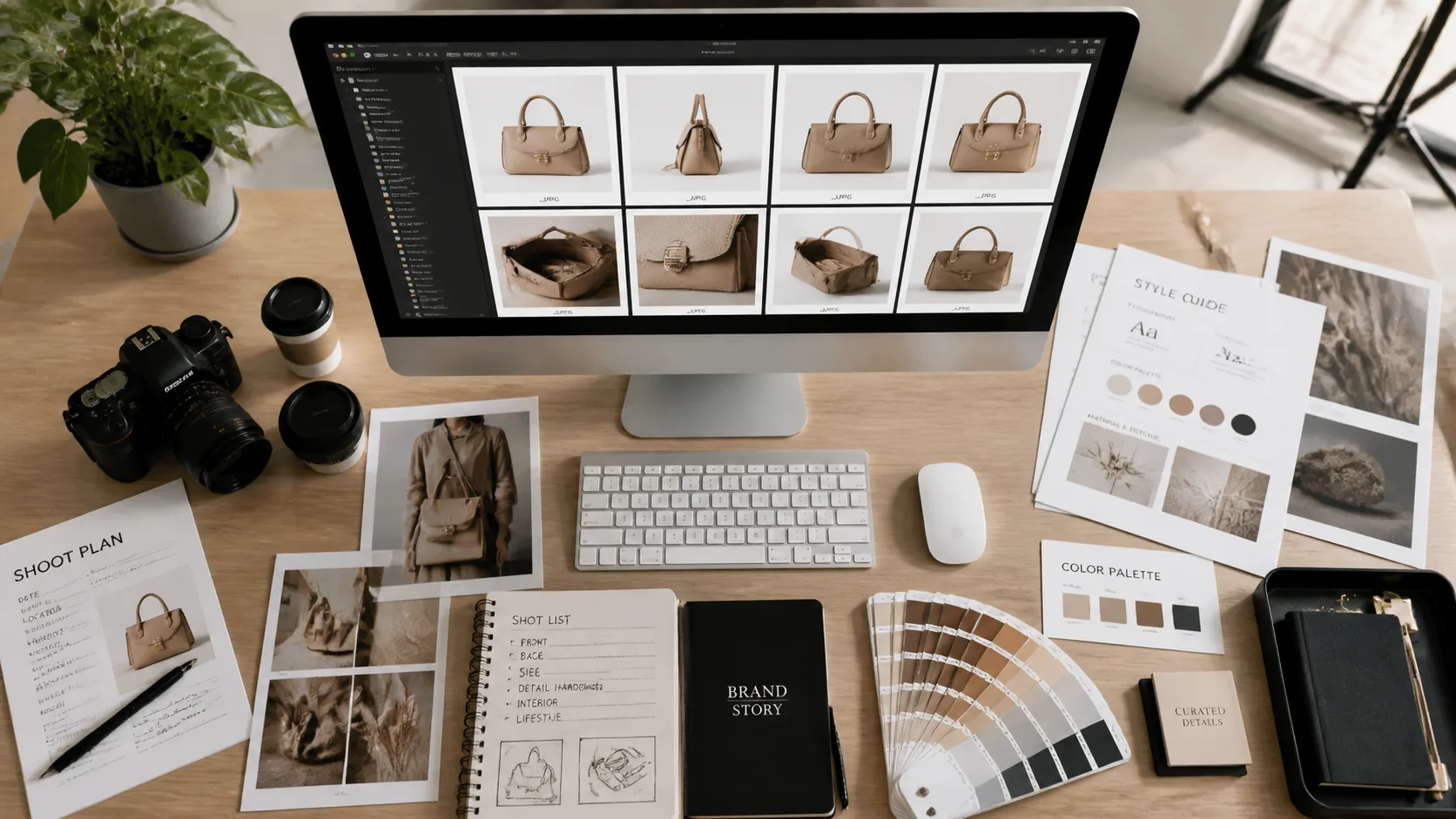
AI image generation isn't free. But if you choose the right model and strategy, the cost difference can be surprisingly large.
AI image generation isn't free. But if you choose the right model and strategy, the cost difference can be surprisingly large.
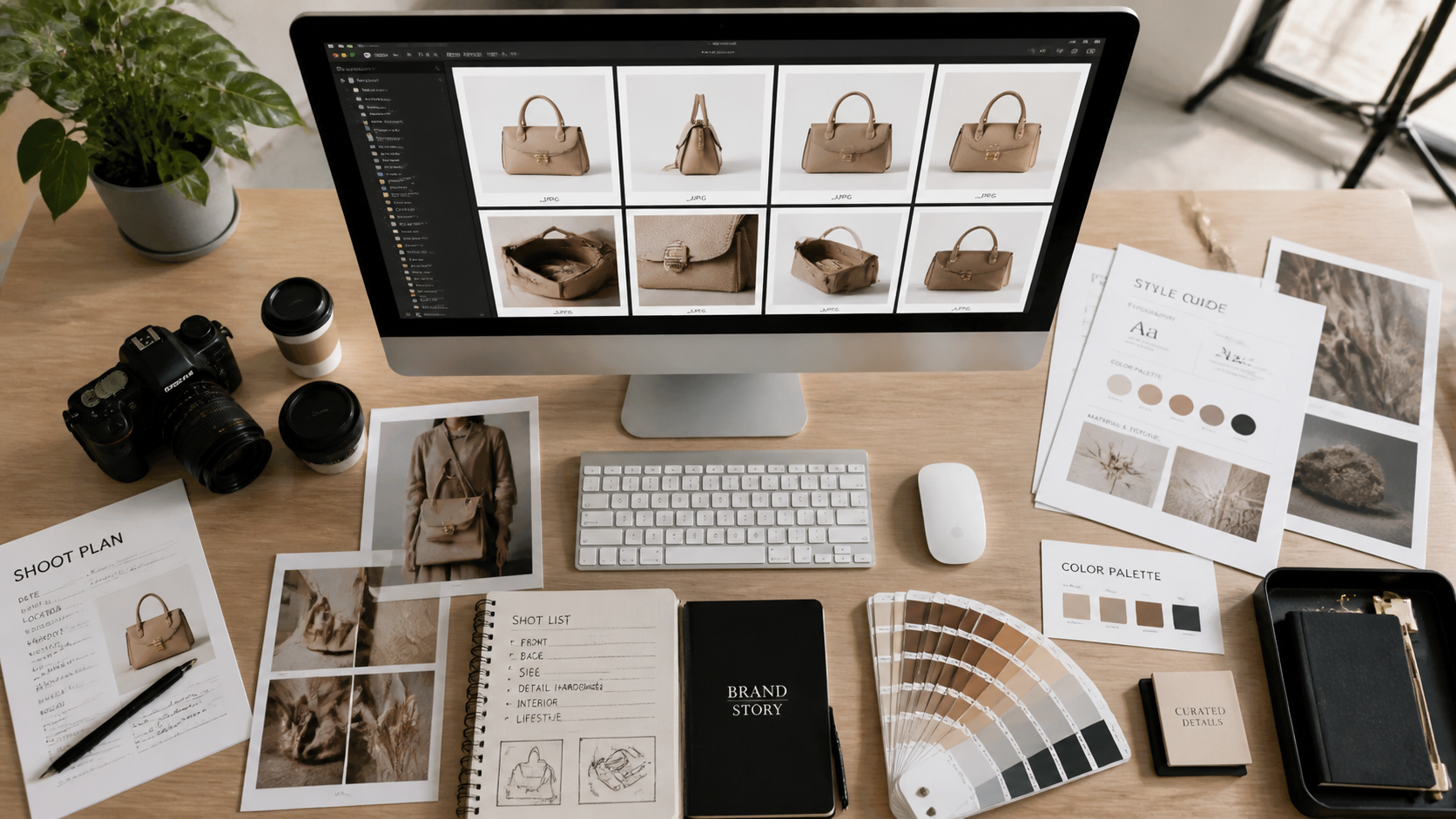
If You Can't Calculate the Cost, You're Just Burning Money
After many e-commerce teams start using AI image generation, their understanding of costs often stops at "it's cheaper than photography." While true, this is too rough an estimate.
The billing methods for GPT Image 2 and Nano Banana 2 are completely different—one uses a token-based system, and the other uses fixed-tier pricing. If you don't understand the difference between the two, you might unknowingly spend several times more money.
This article will break down, calculate, and compare the pricing structures of both models, and finally provide the optimal solutions for three different budget tiers.
Two Completely Different Billing Logics
GPT Image 2: Token-Based Billing
OpenAI uses token-based billing for GPT Image 2. The number of output tokens for an image depends on its size and quality tier:
| Quality Tier | 1024×1024 Output Tokens | Equivalent Unit Price ($30/1M tokens) |
|---|---|---|
| low | 272 tokens | ≈ $0.008 |
| medium | 1,056 tokens | ≈ $0.032 |
| high | 4,160 tokens | ≈ $0.125 |
Vertical images (1024×1536) require more tokens:
| Quality Tier | 1024×1536 Output Tokens | Equivalent Unit Price |
|---|---|---|
| medium | 1,584 tokens | ≈ $0.048 |
| high | 6,240 tokens | ≈ $0.187 |
Note: This is only the cost of output tokens. If you use the editing workflow (modifying based on a real image), there will also be a cost for the input image tokens ($8/1M tokens). High-fidelity reference images require a significant number of input tokens, so the total cost for editing scenarios will be higher than pure generation.
Nano Banana 2: Resolution-Tier Billing
Google uses a more intuitive fixed-tier pricing for Nano Banana 2:
| Resolution | Standard Unit Price | Batch Unit Price |
|---|---|---|
| 1K | $0.067 | $0.034 |
| 2K | $0.101 | $0.051 |
| 4K | $0.151 | $0.076 |
The advantage of this pricing method is that you can calculate the total cost at a glance. If you need 3 images at 2K resolution for each of 100 SKUs, the total cost is 100 × 3 × $0.101 = $30.30. There's no guesswork.
Direct Comparison: How Much Does the Same Request Cost?
To give you a more intuitive feel, I've made a direct cost comparison across three common scenarios.
Scenario 1: 100 SKUs, White Background Main Images
Generate 4 "low" drafts + 1 "medium" final image for each SKU.
| Model | Calculation Method | Total Cost |
|---|---|---|
| GPT Image 2 | 100 × (4 × $0.008 + 1 × $0.032) = 100 × $0.064 | $6.40 |
| GPT Image 2 Batch | Above × 0.5 | $3.20 |
| Nano Banana 2 Standard | 100 × 1 × $0.067 (final image only) | $6.70 |
| Nano Banana 2 Batch | Above × 0.5 | $3.35 |
Conclusion: For white background main images, the costs are very close. GPT Image 2's "low" drafts are extremely cheap, allowing for extensive exploratory generation; Nano Banana 2's Batch mode is also very competitive.
Scenario 2: 100 SKUs, Full 3-Image Sets
Generate a main image + a lifestyle scene image + a detail image for each SKU, with 3 "low" drafts + 1 "medium" final image per shot.
| Model | Calculation Method | Total Cost |
|---|---|---|
| GPT Image 2 | 100 × 3 × (3 × $0.008 + 1 × $0.032) = 100 × 3 × $0.056 | $16.80 |
| GPT Image 2 Batch | Above × 0.5 | $8.40 |
| Nano Banana 2 Standard | 100 × 3 × $0.067 | $20.10 |
| Nano Banana 2 Batch | Above × 0.5 | $10.05 |
Conclusion: GPT Image 2 is slightly cheaper in batch scenarios, primarily because the cost of "low" drafts is extremely low. But the gap isn't huge.
Scenario 3: 100 Chinese Event Poster Final Drafts
Generate 2 "medium" drafts + 1 "high" final image per event.
| Model | Calculation Method | Total Cost |
|---|---|---|
| GPT Image 2 | 100 × (2 × $0.032 + 1 × $0.125) | $18.90 |
| GPT Image 2 Batch | Above × 0.5 | $9.45 |
| Nano Banana 2 Standard 2K | 100 × $0.101 | $10.10 |
| Nano Banana 2 Batch 2K | Above × 0.5 | $5.05 |
Conclusion: If you only need 2K posters, Nano Banana 2 is cheaper. However, if you need GPT Image 2's "dense text" capability for high-precision Chinese posters, the premium is worth it.
Hidden Costs: Three Bills You Might Be Ignoring
The above are all direct costs for API calls. However, in actual operations, three hidden costs are often overlooked.
First Bill: Rework Costs
If a generated image is unusable and needs to be regenerated, your cost doubles.
GPT Image 2's mask editing and high-fidelity inputs result in a higher "first-time success rate," especially in scenarios requiring precise control. Nano Banana 2 also has a decent first-time success rate driven by multiple reference images, but the lack of mask editing means local modifications are more likely to require complete regeneration.
Empirical Data: In my tests, the first-pass rate for the GPT Image 2 editing workflow is about 75-85%, while the Nano Banana 2 multi-reference workflow is about 65-80%. This depends heavily on the product category and prompt quality.
Second Bill: Post-Processing Costs
AI-generated images aren't finished products; post-processing is essential.
The post-processing needs for the two models differ:
- GPT Image 2's mask editing means post-processing is more focused on "fine-tuning"—removing edge halos and minor color adjustments.
- Nano Banana 2's holistic generation means post-processing may require more "corrections"—tweaking the product itself or proofreading text.
If your team lacks a dedicated designer, post-processing costs might eat up the money you saved by using AI generation.
Third Bill: Data Security Costs
This is the easiest to overlook, but potentially the most costly.
- OpenAI: The API and enterprise products do not use your inputs or outputs to train models by default.
- Google: Paid services do not use your data to improve products; but content generated via free services and the AI Studio free tier can be used by Google to improve products, and may be subject to human review.
If you are dealing with unreleased product images, packaging proofs, or trade secrets, using Google's free tier to generate images equals handing over your trade secrets to Google as training data. This is not a small issue.
Optimal Solutions for Three Budget Tiers
Low Budget (≤ $0.05 per image)
First choice: Nano Banana 2 Batch mode. The Batch price for 1K resolution is only $0.034/image, currently the cheapest high-quality AI image generation solution. It's suitable for multi-SKU batch exploration, scene direction testing, and draft-level outputs.
If you need text rendering capabilities, you can use GPT Image 2's "low" tier ($0.008/image) for drafts, and then use Nano Banana 2 for batch scene expansion.
Medium Budget ($0.05 - $0.12 per image)
A hybrid approach using both models. Use Nano Banana 2 Standard ($0.067/image) for batch scene images, and GPT Image 2 "medium" ($0.032-$0.048/image) for high-value individual products and text posters.
This range offers the highest cost-effectiveness—the quality of GPT Image 2's "medium" tier is already sufficient for final versions, yet the price is lower than Nano Banana 2's Standard tier.
High Budget (> $0.12 per image)
Use GPT Image 2 "high" for final draft refinement. The price of $0.125-$0.187/image isn't low, but for scenarios like hero images, macro jewelry shots, and brand KVs—where "one image is worth a thousand bucks"—this investment is justified.
Meanwhile, use Nano Banana 2 for early-stage batch exploration and localized versions, reserving the "high" tier exclusively for images that actually need to be published.
The Most Common Cost Mistakes
Mistake 1: Running everything on "high" from the start. For most images, "medium" is sufficient. Reserve "high" only for truly valuable image placements.
Mistake 2: Not using Batch. If your request isn't urgent, using the Batch API can save you half the cost. Both providers support it.
Mistake 3: Ignoring input tokens. GPT Image 2's editing workflow incurs costs for input image tokens. If you feed a 4K reference image for editing, the input tokens might cost more than the output tokens.
Mistake 4: Using free tiers to generate commercial content. Google's free tier means your data might be used for model training. For commercial content, you must use paid APIs.
Summary in One Sentence
GPT Image 2 is actually highly cost-effective in the low/medium tiers and isn't necessarily more expensive than Nano Banana 2. The real cost gap comes from the high tier and the input costs of the editing workflow. Nano Banana 2's advantage is transparent, predictable pricing, making it ideal for budgeting.
The optimal strategy isn't to just pick the cheaper one, but to allocate your budget based on the image's value—use the cheapest for drafts, the most suitable for final drafts, and the absolute best for hero images.
Want to experience the quality differences between different tiers yourself? gpt-image2ai.art provides the full range of GPT Image 2 quality tiers. You can use the same prompt to run low, medium, and high versions to see if the price difference is worth it.